Contribution Margin Ratio Formula Per Unit Example Calculation

Variable costs are not typically reported on general purpose financial statements as a separate category. Thus, you will need to scan the income statement for variable costs and tally the list. Some companies do issue contribution margin income statements that split variable and fixed costs, but this isn’t common. If you monitor the contribution margin of your individual products over a certain period of time, you can also see how their sales success and manufacturing costs develop. For example, if the cost of raw materials increases, this is reflected in higher variable costs, treasury stock financial accounting which reduces the contribution margin. Companies can then decide whether to adjust prices to compensate for this loss.

Just subtract your variable cost per unit from your selling price per unit. It’s a fast way to check profitability and make smart pricing or production decisions. Contribution margin gives you more than just a math equation—it gives you control. By showing what’s left after variable costs are paid, it gives you the clarity to steer your pricing, spending, and sales strategy. It won’t magically fix a struggling business, but it will shine a light on what’s really going on.

It also helps with your break-even analysis – that is, the dollar amount of sales you need to cover your fixed costs. Once you have calculated the total variable cost, the next step is to calculate the contribution margin. The contribution margin is the difference between total sales revenue and the variable cost of producing a given level of output. As mentioned above, contribution margin refers to the difference between sales revenue and variable costs of producing goods or services. This resulting margin indicates the amount of money available with your business to pay for its fixed expenses and earn profit. Using this formula, the contribution margin can be calculated for total revenue or for revenue per unit.

It shows how much you really earn from each sale after covering the costs that fluctuate with volume. Without it, you’re flying blind—especially when cash gets tight or demand shifts. If your product or service offers real value, a slight increase in price might not deter customers—but it could significantly raise your contribution margin. Some products serve as loss leaders—they have low or even negative contribution margins but bring customers who then buy higher-margin items. You need to look at the entire customer journey and lifetime value to understand their true worth.

Contribution margin vs gross profit

Variable expenses directly depend upon the quantity of products produced by your company. For example, if the cost of raw materials for your business suddenly becomes pricey, then your input price will vary, and this modified input price will count as a variable cost. Product A’s contribution margin ratio is 0.42 or 42% where as product B’s contribution margin ratio is 0.5 or 50%.

This is because the contribution margin ratio indicates the extent to which your business can cover its fixed costs. The $30.00 represents the earnings remaining after deducting variable costs (and is left over to cover fixed costs and more). Suppose Company A has the following income statement with revenue of 100,000, variable costs of 35,000, and fixed costs of 20,000.

What is the difference between the contribution margin ratio and contribution margin per unit?

A restaurant that does 70% of its business during summer months can’t just look at peak-season contribution margins—it needs to ensure those profitable months carry the slow periods. Your contribution margin directly impacts cash flow, but not always in obvious ways. Products with high contribution margins generate more cash per sale, giving you breathing room to cover fixed expenses and invest in growth. But you also need to consider the timing of when you collect revenue versus when you pay variable costs. The contribution margin ratio is the difference between a company’s sales and variable expenses, expressed as a percentage.

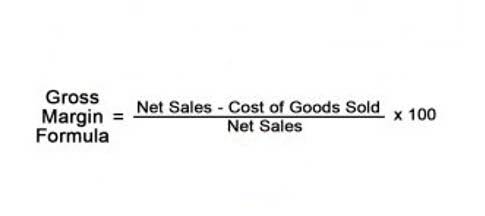
Investors and analysts use the contribution margin to evaluate how efficient the company is at making profits. For example, analysts can calculate the margin per unit sold and use forecast estimates for the upcoming year to calculate the forecasted profit of the company. Net sales are basically total sales less any returns or allowances. This is the net amount that the company expects to receive from its total sales.

  • For example, raising prices increases contribution margin in the short term, but it could also lead to lower sales volume in the long run if buyers are unhappy about it.
  • As a result, a high contribution margin would help you in covering the fixed costs of your business.
  • And if you ever find yourself using a Contribution Margin Calculator, you’ll know exactly what numbers to plug in and what they mean for your business.
  • In short, profit margin gives you a general idea of how well a business is doing, while contribution margin helps you pinpoint which products are the most profitable.

Ability to absorb fixed costs

Contribution margin focuses on the costs and profitability of units for sale, and businesses can use this ratio to do break-even analysis or product-level profitability assessments. Gross profit measures the overall financial health of the business, and the gross profit margin can help you make decisions about overall efficiency. The contribution margin is the leftover revenue after variable costs have been covered and it is used to contribute to fixed costs. If the fixed costs have also been paid, the remaining revenue is profit.

Accounting software

Look for systems that can handle multi-location businesses, track costs by product line, and integrate with your inventory management. The goal is real-time visibility into your margins without manual data entry. Your contribution margin numbers become accounts receivable job description and duties powerful when you start comparing different products or services.

Breakeven Analysis

The contribution margin income statement separates the fixed and variables costs on the face of the income statement. This highlights the margin and helps illustrate where a company’s expenses. Variable expenses can be compared year over year to establish a trend and show how profits are affected. Management uses the contribution margin in several different forms to production and pricing decisions within the business. This concept is especially helpful to management in calculating the breakeven point for a department or a product line.

  • As production levels increase, so do variable costs and vise versa.
  • We’ll start with a simplified profit and loss statement for Company A.
  • In other words, fixed costs are not dependent on your business’s productivity.
  • Products with higher margins are generally more financially advantageous, even if sales volume isn’t that high.

For a quick example to illustrate the concept, suppose there is an e-commerce retailer selling t-shirts online for what is framework $25.00 with variable costs of $10.00 per unit. To calculate the contribution margin that is used in the numerator in the preceding calculation, subtract all variable expenses from sales. A company has budgeted sales of $200,000, a profit of  $60,000 and fixed expenses of $40,000.

Time is money, and your contribution margin analysis should account for resource constraints. Next, the CM ratio can be calculated by dividing the amount from the prior step by the price per unit. The greater the contribution margin (CM) of each product, the more profitable the company is going to be, with more cash available to meet other expenses — all else being equal. In the Dobson Books Company example, the contribution margin for selling $200,000 worth of books was $120,000. This means the higher the contribution, the more is the increase in profit or reduction of loss.

A contribution margin analysis can be done for an entire company, single departments, a product line, or even a single unit by following a simple formula. The contribution margin can be presented in dollars or as a percentage. Further, it is impossible for you to determine the number of units that you must sell to cover all your costs or generate profit. Thus, the concept of contribution margin is used to determine the minimum price at which you should sell your goods or services to cover its costs. The contribution margin ratio is also known as the profit volume ratio.


Free Payroll Tools: Calculator, Glossary, Tax Map

Each of your paychecks may be smaller, but you’re more likely to get a tax refund and less likely to have tax liability when you fill out your tax return. One way to manage your tax bill is by adjusting your withholdings. That would mean that instead of getting a tax refund, you would owe money. The W-4 calculator can help you adjust your withholdings to determine if you’ll get a refund or a balance due come tax time.

  • We save your information — change it anytime and our tax calculator will show you how it affects your federal tax refund.
  • Just like with your federal income taxes, your employer will withhold part of each of your paychecks to cover state and local taxes.
  • Not only is he responsible for baking delicious treats for his customers, but he also has to abide by the law and pay payroll taxes to Uncle Sam.
  • You learned the ins and outs of the various payroll taxes, how to calculate them, and the penalties you can face if you avoid taxes.
  • Select your state from the list below to see its salary employee calculator.

How is Federal Withholding (Federal Income Tax) calculated?

Begin with Pay Type and select Hourly or Salary from the dropdown menu. If the employee is hourly, input their pay rate and the number of hours they worked for the pay period. If they worked more than 40 hours and accrued overtime, input the number of additional hours they worked during step three. Great for both employers and employees, this tool helps calculate paychecks based on pay type, pay rate, bonus, commission, overtime, federal/state taxes and more. We are biased and we think we have the best paycheck calculator 😀 Our calculator is always kept up-to-date with the latest tax rates. It works for salary and hourly jobs, as well as self-employed people.

Wage garnishments are court-ordered deductions taken from your employees’ paychecks to pay off debts such as child support, student loans, or unpaid taxes. As an employer, you must comply with these orders and ensure you deduct the correct amounts from your employees’ pay. You should see fields that say pay type, pay rate, hours worked, pay date, and pay period. Start with “pay type” and select hourly or salary from the dropdown menu.

Know how much to withhold from your paycheck to get a bigger refund. Then select the pay date and the employee’s pay frequency—or, rather, if you pay them weekly or every two weeks. Need help establishing your business or want guidance on business registration? Schedule a consultation with our expert team at Business Initiative to discuss business registration and formation services. If your W4 on file is in the old format (2019 or older), toggle “Use new Form W-4” to change the questions back to the previous form. However if you do need to update it for any reason, you must now use the new Form W-4.

Use our tax refund estimator to find out how much you’ll get back this year (or how much you’ll owe). Estimate your tax refund, uncover deductions and credits, and more. Your federal tax bracket varies yearly, and you need to check the latest data before you do your tax return. Like federal tax liability, there are a few substeps to work out your state tax liability.

IRS Form W-4 is completed and submitted to your employer, so they know how much tax to withhold from your pay. If you want a bigger intuit paycheck tax calculator refund or smaller balance due at tax time, you’ll have more money withheld and see less take home pay in your paycheck. If you want a bigger paycheck, you’ll have less withheld and have a smaller refund or larger balance due at tax time. These paycheck details are based on your pay info and our latest local and federal tax withholding guidance. Payroll taxes are taxes based on salaries, wages, commissions and tips an employee makes. They are withheld from their paychecks by their employer, who then pays them to the government.

How Your Paycheck Works: Income Tax Withholding

So you’ll understand the taxes reported on your employees’ paychecks and payroll forms. This ensures the calculator applies the correct state tax rates to your calculations. If you work in one state but live in another, select your work state. Today, you’re going to meet Hector—a small business owner running a bakery in the sunny state of California. Not only is he responsible for baking delicious treats for his customers, but he also has to abide by the law and pay payroll taxes to Uncle Sam.

  • The Social Security tax wage base has increased from $160,000 in 2023 to $168,600 in 2024.
  • Federal and state taxes are different, with federal taxes covering nationwide programs and services, while state taxes fund state-specific needs.
  • To learn how to manually calculate federal income tax, use these step-by-step instructions and examples.
  • In our calculators, you can add deductions under “Benefits and Deductions” and select if it’s a fixed amount, a percentage of the gross-pay, or a percentage of the net pay.

To learn how to manually calculate federal income tax, use these step-by-step instructions and examples. The 2024 FUTA tax rate is 6% and applies to the first $7,000 you pay in wages to each employee during the year, which is the federal wage base. However, business owners can take a credit against their FUTA tax for amounts paid to their state’s unemployment funds.

How to Use the Payroll Tax Calculator

The TaxCaster calculator is designed for estimating federal taxes. Federal and state taxes are different, with federal taxes covering nationwide programs and services, while state taxes fund state-specific needs. However, while the calculator focuses on federal taxes, TurboTax can help you with both federal and state taxes.

How to calculate a salary paycheck?

Federal income tax and FICA tax withholding are mandatory, so there’s no way around them unless your earnings are very low. However, they’re not the only factors that count when calculating your paycheck. When you use the redesigned Form W-4, your withholding is based on your expected filing status and standard deduction for the year. Benefit deductions can include contributions to retirement accounts (such as a 401(k) or IRA), health insurance premiums, and other employee benefits. Offering pre-tax benefit deductions can reduce your employees’ taxable income, provide valuable financial advantages, and potentially lower their overall tax bills.

I still need to pay my monthly bills so I can’t have too much taken out. We use general info such as your filling status, number of dependents, and taxable income to get an understanding of your tax situation. Your marital status and whether you have any dependents will determine your filing status. Exemptions have been eliminated from Federal income tax since the Tax Cuts and Jobs Act (TCJA) was implemented in 2018. However, some states still have exemptions in their income tax calculation. Use this guide to figure out how much you should withhold along with the federal withholding calculator above.

This includes the employee’s filing status, number of allowances, and additional withholdings. This is information you should be able to glean from the employee’s Form W-4. If you don’t yet have the employee’s W-4, the calculator can fill in tax rates to help you create a semi-accurate paycheck estimate.

Gross pay represents the total earnings, while net pay reflects the actual amount available for spending and saving after all necessary deductions. Whether you’ve started a small business or are self-employed, bring your work to life with our helpful advice, tips and strategies. The contribution limit for 401(k) and 403(b) plans has increased to $23,000 annually, up from $22,500 in 2023. Employees aged 50 and over can contribute an additional $7,500, for a total of $30,500.

How are federal taxes calculated?

Certain discount offers may not be valid for mobile in-app purchases and may be available only for a limited period of time. Fundamental property tax concepts you should be aware of that can help you calculate your property taxes. We provide third-party links as a convenience and for informational purposes only. Intuit does not endorse or approve these products and services, or the opinions of these corporations or organizations or individuals. Intuit accepts no responsibility for the accuracy, legality, or content on these sites.

Payroll glossary

Payroll taxes are used to fund social insurance programs like Social Security and Medicare and show up as FICA and MedFICA on pay stubs. If you’ve followed all the recommendations to lower your tax liability and still owe taxes, don’t worry. TurboTax offers several ways to pay, including direct debit from a bank account and mail-in payments. If you can’t pay the full amount right away, the IRS offers payment plans and installment agreements.

Remember, the federal withholding calculator is a helpful tool, but it’s an estimate. Federal income tax withholding refers to the portion of your employees’ paychecks you send directly to the federal government to cover their tax liability. To accurately calculate tax withholding for your employees, consider their total income, filing status, and the number of allowances or exemptions they claim.

Unadjusted Trial Balance Format & Example

Accountants call this process ‘balancing the accounts.’ It shows if total debits equal total credits as they should. Making sure these numbers are right is super important for the financial statement to be correct. Unadjusted Trial Balance is a direct report extracted by a business from its Double Entry Accounting system. An accurate adjusted trial balance keeps your financial records clear, organized, and reliable. It confirms that all account balances reflect necessary updates and that total debits and credits remain in balance. In this example, the unadjusted trial balance highlights the different account balances of ABC Company.

He then took all the balances of each account in the Ledger and summarized them in an unadjusted trial balance which is as follows. After the preparation of an unadjusted trial balance, the next step in the accounting cycle is to pass adjusting entries. The following unadjusted trial balance has been prepared from the ledger accounts of Company A. The trial balance is used to test the equality between total debits and total credits. If the debit and credit balances don’t match, then there is an error somewhere in the accounting process. The next step is to ensure that total debit and credit balances match, meaning that they are equal.

However, it does not account for any necessary adjustments that may arise from accrued revenues, expenses, or other financial activities that have not yet been recorded. An adjusted trial balance is a crucial internal document used by businesses to ensure accurate financial reporting. It reflects the balances of all the accounts after adjustments for accrued expenses, deferred revenues, or missing transactions. This process ensures that debits and credits are properly matched, helping to present a more accurate picture of the company’s financial health before preparing formal financial statements. A trial balance, particularly the adjusted trial balance, is used to prepare financial statements by providing a comprehensive list of all account balances.

How is an Unadjusted Trial Balance Prepared?

Preparation of unadjusted trial balance is the fourth step in the accounting cycle after identification of a transaction, recording it in journal and posting it in to ledger. It lists all the ledger accounts in a summary form which will later be used in the financial statements. Step by step procedure for preparing an unadjusted trial balance is as follows. The sole reason for the preparation of the unadjusted trial balances is to confirm the equality of the debit and credit accounts entries. With a proper recording of all transaction in the general journal and in accordance to the double entry business principle, total debit entries should be equivalent to total credit entries.

  • The errors include; the incorrect record and analysation of transactions, the omission of accounts from the journal or ledger accounts and the understating or overstating the debit and credit accounts.
  • The trial balance is used to test the equality between total debits and total credits.
  • An adjusted trial balance is crucial because it ensures that all financial transactions are accurately recorded and that the financial statements reflect the true financial position of the business.
  • An unadjusted trial balance is a trial balance which is created before any adjusting entries are made in the ledger accounts.
  • In the income statement, you will be required to list all your revenue accounts which have a credit balance.

It should be noted though that in some automated accounting systems, the preparation of trial balances is no longer needed. While it is possible to use your general ledger as a reference for the preparation of contradebt financial statements, it is inefficient. Of the three, you will have to prepare the unadjusted trial balance first, followed by the adjusted trial balance. Remember that transactions are recorded in the journal and posted to accounts in the general ledger. Figure 1 shows the unadjusted trial balance for Bold City Consulting, Inc., at March 31, 2018, after its third month of operations. The company’s employees earned an additional $1,500 in wages that haven’t been paid yet.

Transaction analysis Financial Accounting Part 1 Video Tutorial LinkedIn Learning, formerly Lynda com

In summary, the unadjusted trial balance (UTB) lists all accounts in an organization at a given point or period of time. It will contain all assets, liabilities, and equity accounts so they can be used to prepare your company’s income statement and balance sheet. Start entering the balances for each account into the 1st column of an unadjusted trial balance spreadsheet (UBTB).

Understanding Unadjusted vs. Adjusted Trial Balances in Reporting

This process ensures that revenues and expenses are recognized in the correct accounting period, which is essential for accurate financial reporting and compliance with accounting principles. An unadjusted trial balance lists all account balances before any adjustments are made. It reflects the initial balances after recording all transactions but before any end-of-period adjustments. An adjusted trial balance, on the other hand, includes the effects of adjusting entries, such as for prepaid expenses, accrued liabilities, and depreciation.

  • Each side—debits and credits—should mirror each other in total if everything is recorded correctly.
  • It lists all the ledger accounts in a summary form which will later be used in the financial statements.
  • These adjustments are vital to ensure that all financial transactions are properly reflected in the adjusted trial balance.
  • The next step is to transfer the income statement accounts to the unadjusted trial balance.

Unadjusted Trial Balance Example

Since no what is an accrued expense square business glossary adjusting entries are made yet, expect that most of the figures presented in an unadjusted trial balance are not the ones you’ll see in financial statements. You’ll be preparing the unadjusted and adjusted trial balance once a month if your business is reporting financial statements on a monthly basis. The process of preparing an unadjusted trial balance starts by gathering all the relevant account balances from the general ledger of the organization. These balances are transferred to a trial balance worksheet, organized in a standardized manner.

While every company maintains a record of its account balances in its general ledger, financial statements can only be complete and accurate if all accounts are prepared accurately. Unadjusted and Adjusted Trial Balance is done to prepare final accounts which can then be used as a basis for recording adjusting entries to prepare the adjusted trial balance. Preparing an unadjusted trial balance is the fourth step in the accounting cycle. A trial balance is a list of all accounts in the general ledger that have nonzero balances. An unadjusted trial balance is a list of all the balances from a company’s accounting ledger before any adjusting entries are made. Creating accurate financial reports starts with a good unadjusted trial balance.

Advisory services provided by Carbon Collective Investment LLC (“Carbon Collective”), an SEC-registered investment adviser. Our writing and editorial staff are a team of experts holding advanced financial designations and have written for most major financial media publications. The next step is to transfer the income statement accounts to the unadjusted trial balance. The preparation involves listing the accounts in a structured format, typically in the order of their appearance in the financial statements. The unadjusted trial balance acts as a preventive measure, giving accountants an opportunity to rectify mistakes before finalizing the financial statements. Accountants of ABC Company have passed the journal entries in the journal and posts the entries in to their respective ledgers.

A trial balance simply shows a list of the ledger accounts and their balances. The completion of an unadjusted trial balance will be marked by the summation of the total debit and credit balances on their respective columns. With a proper record of transactions during a given business period, the total debits should be equal to the total credits. As with all financial reports, trial balances are always prepared with a heading.

It serves to be the source of all financial statements that a company creates. An unadjusted trial balance is prepared to ensure the accounts identify the errors and mistakes that may be present in temporary accounts the records so that the same could be avoided at the later stages. All account names are written in the first column, the debit balances are written in the second column, and the credit balances are written in the third column. The accounts are listed in the order in which they appear in the general ledger. Preparing an adjusted trial balance requires attention to detail to avoid errors in your financial statements.

Accounts Payable ($500), Unearned Revenue ($4,000), Common Stock ($20,000) and Service Revenue ($9,500) all have credit final balances in their T-accounts. These credit balances would transfer to the credit column on the unadjusted trial balance. This trial balance will be prepared once again after all adjusting entries have been posted and then that report will be called an adjusted trial balance. After analyzing transactions, recording them in the journal, and posting into the ledger, we enter the fourth step in the accounting process – preparing a trial balance.

Enter all account transactions that have occurred during this accounting period into the 2nd column of UBTB. It is “adjusted” because all of the transactions that have affected the organization’s accounts (both debit and credit) are included on it. The article covers the concept and purpose of an unadjusted trial balance, explaining its role in verifying debit and credit equality before adjusting entries are made. It also highlights how the unadjusted trial balance is prepared from the general ledger at the end of an accounting period.

How to Calculate Predetermined Overhead Rate: Formula & Uses

which of the following is the correct formula to compute the predetermined overhead rate?

The allocation base (also known as the activity which of the following is the correct formula to compute the predetermined overhead rate? base or activity driver) can differ depending on the nature of the costs involved. Our team of reviewers are established professionals with decades of experience in areas of personal finance and hold many advanced degrees and certifications. For information pertaining to the registration status of 11 Financial, please contact the state securities regulators for those states in which 11 Financial maintains a registration filing. 11 Financial may only transact business in those states in which it is registered, or qualifies for an exemption or exclusion from registration requirements.

Learn At Your Own Pace With Our Free Courses

After going to its terms and conditions of the bidding, it stated the bid would be based on the overhead rate percentage. Therefore, the one with the lower shall be awarded the auction winner since this project would involve more overheads. Use the following net sales data for the calculation of a predetermined overhead rate.

which of the following is the correct formula to compute the predetermined overhead rate?

How confident are you in your long term financial plan?

A predetermined overhead rate, also known as a plant-wide overhead rate, is a calculation used to determine how much of the total manufacturing overhead cost will be attributed to each unit of product manufactured. The rate is determined by dividing the fixed overhead cost by the estimated number of direct labor hours. Commonly, the manufacturing overhead cost for machine hours can be ascertained from the predetermined overhead rate in the manufacturing industry. Further, it is stated that the reason for the same is that overhead is based on estimations and not the actuals. Suppose that X limited produces a product X and uses labor hours to assign the manufacturing overhead cost. The estimated manufacturing overhead was $155,000, and the estimated labor hours involved were 1,200 hours.

which of the following is the correct formula to compute the predetermined overhead rate?

Would you prefer to work with a financial professional remotely or in-person?

which of the following is the correct formula to compute the predetermined overhead rate?

At Finance Strategists, we partner with financial experts to ensure the accuracy of our financial content. Our goal is to deliver the most understandable and comprehensive explanations of financial topics using simple writing complemented by helpful graphics and animation videos. This can result in abnormal losses as well and unexpected expenses being incurred. Take self-paced courses to master the fundamentals of finance and connect with like-minded individuals.

  • Further, it is stated that the reason for the same is that overhead is based on estimations and not the actuals.
  • This can result in abnormal losses as well and unexpected expenses being incurred.
  • Our team of reviewers are established professionals with decades of experience in areas of personal finance and hold many advanced degrees and certifications.
  • There are concerns that the rate may not be accurate, as it is based on estimates rather than actual data.
  • The predetermined overhead rate calculation shown in the example above is known as the single predetermined overhead rate or plant-wide overhead rate.
  • Our work has been directly cited by organizations including Entrepreneur, Business Insider, Investopedia, Forbes, CNBC, and many others.
  • Finance Strategists has an advertising relationship with some of the companies included on this website.

Which of these is most important for your financial advisor to have?

  • Also, if the rates determined are nowhere close to being accurate, the decisions based on those rates will be inaccurate, too.
  • Ask a question about your financial situation providing as much detail as possible.
  • The production head wants to calculate a predetermined overhead rate, as that is the main cost allocated to the new product VXM.
  • Our writing and editorial staff are a team of experts holding advanced financial designations and have written for most major financial media publications.
  • The formula for calculating Predetermined Overhead Rate is represented as follows.

Direct labor standard rate, machine hours standard rate, and direct labor hours standard rate are some methods of factory overhead absorption. The predetermined overhead rate is used to price new products and to calculate variances in overhead costs. Variances can be calculated for actual versus budgeted or forecasted results. As the production head wants to calculate the predetermined overhead rate, all the direct costs will be ignored, whether direct cost (labor or material). A Predetermined Overhead rate shall be used to calculate an estimate on the projects that are yet to commence for overhead costs.

Our Team Will Connect You With a Vetted, Trusted Professional

All of our content is based on objective analysis, and the opinions are our own. While it may become more complex to have different rates for each department, it is still considered more accurate and helpful because the level of efficiency and precision increases. If you’d like to learn more about calculating rates, check out our in-depth interview with Madison Boehm. Our mission is to empower readers with the most factual and reliable financial information possible to help them make informed decisions for their individual needs. This team of experts helps Finance Strategists maintain the highest level of accuracy and professionalism possible.

What is a Agricultural accountant? Key Skills, Qualifications and Career Path UK Career Advice

what is agricultural accounting

Farm accountants help decipher loan terms and prepare crucial financial statements necessary for loan application approvals. With the farm accountant’s guidance, farms can navigate this process more smoothly, ensuring a successful transition to the new generation of farm management. They consider all tangible and intangible assets, including land, buildings, livestock, and farming equipment, providing a comprehensive picture of the farm’s worth. Farm accountants can provide an accurate estimation of a farm’s value, crucial when planning for a sale or inheritance. A thorough understanding of depreciation and amortization concepts is also crucial in farm accounting.

  • At the same time, they devise cash flow management strategies to ensure the farm can meet its financial obligations while maintaining financial resilience in unexpected circumstances.
  • Farm income includes revenue from operating a farm, selling crops, subsidies from the government, and more.Understanding what qualifies as farm income is imperative.
  • Solvency ratios, including the debt-to-asset ratio and the equity-to-asset ratio, provide insights into the farm’s long-term financial stability and its capacity to withstand adverse economic conditions.
  • If livestock is born late, early, or out-of-season, they run the risk of not being compliant with the government’s livestock age standards.
  • The farm accountant, endowed with financial acumen, emerges as a trusty guide in this challenging journey.
  • Business accounting follows accrual methods, which allow entries of revenue and expense in the absence of cash transactions.

Advancements of Farm Automation Practices

what is agricultural accounting

This ensures proper financial management, helps in budgeting, and simplifies tax compliance for farmers. Their guidance, anchored in a deep understanding of financial analysis, illuminates the path to profitability and sustainability for Certified Bookkeeper farming operations. They are instrumental in tax planning, identifying tax deductions exclusive to the agriculture sector, and optimizing farm income to minimize tax burdens.

what is agricultural accounting

Is Growing Microgreens Profitable? – A Complete Guide for Farmers

These statements include the balance sheet, income statement, and cash flow statement, each offering contribution margin a different perspective on the business’s health. This method records income and expenses when they are earned or incurred, not when the cash is exchanged. This approach provides a more accurate financial picture, particularly in agriculture where the sale of a crop or livestock may occur in a different period than the production.

  • Agricultural accountants need to be aware of local and international price trends, trade policies, and economic factors that can impact a farm’s bottom line.
  • Depreciation allows farmers to deduct the cost of long-term assets, such as machinery and buildings, over their useful life, reducing taxable income.
  • Once the trees reach the point of the commercial production stage, depreciation starts to recognize the expense over its lifetime period.
  • While audits may only happen in some years, preparing for one in advance is still essential.
  • Annual depreciation is the process of allocating the cost of long-term assets, such as machinery and equipment, over their useful life.
  • While farming may be seen as a rustic and ancient way of getting back to the roots of nature, effective agriculture is inundated with cutting-edge technology.

Managing Multiple Income Streams

This statement is crucial for understanding the liquidity and solvency of the farm, which are indicators of its ability to meet short-term obligations and to sustain operations in the long run, respectively. Transitioning from the foundational principles of farm accounting, we now delve into the financial statements that serve as the bedrock of a farm’s financial reporting. These documents are indispensable tools for farmers, providing a snapshot of the operation’s financial status and enabling stakeholders to assess the farm’s economic health and performance.

  • While the fundamental principles of accounting apply to all industries, certain characteristics set agricultural accounting apart from general accounting.
  • As your farm business grows and becomes more complex, it’s important to move beyond basic farm bookkeeping and accounting to more advanced techniques.
  • Capital assets are significant purchases that a farm expects to use over several years, such as machinery, buildings, and land improvements.
  • You can also gauge your farm’s profitability by looking at the month-to-month profit on your PnL.
  • We’ve become accustomed to improvising and making what we have work when the right tools or resources aren’t always available.

what is agricultural accounting

Unconditional grants related to biological assets measured at fair value less costs to sell are recognised as income when the grant becomes receivable. Conditional grants are recognised as income only when the conditions attaching to the grant are met. Use either the Economic Farm Surplus, month-to-month profit, or KPI to understand how profitable your farm is throughout the year.

what is agricultural accounting

First, using the accrual  method revenue is Insurance Accounting recorded when it’s earned, not necessarily when it’s received. In short, revenue and expenses are matched, also known as the matching principle, regardless of timing, resulting in an accurate measurement of profitability. Cash accounting, however, can result in distortions through end of year tax strategies.So, agricultural accounting requires both cash for tax filing and accrual for accurate financial statements. Most traditional accounting programs require that users select one or the other or maintain two sets of books, which just isn’t realistic.

what is agricultural accounting

How do I set it so customers can make partial payments on invoices with a CC?

If you have any additional questions, please leave a comment on this thread. It’s best practice not to mark the invoice as “paid” until you receive the full amount. Otherwise, it could throw off your books and reporting. Allow me to fill you in on everything about the posting of bill payments on a report. To ensure we’re on the same page, can you add more details about the continuation you’re referring to if a customer pays by CC on the desktop?

What if a customer pays less than the partial payment amount due?

Only thing I can see for customizing PAYMENT TERMS is to allow for a discount if paid by certain dates or within a certain number of days. I don’t want to discount it, I want 50% up front, and the remaining balance due at time of completion of job/delivery of goods/performance of service. There are times when it’s necessary for small business owners to accept a partial payment from a customer or pay only part of a vendor invoice. By default, QuickBooks prompts for the full amount due when creating invoices or paying bills. However, you can enter partial payments in QuickBooks in almost the same manner you use to record full-amount payments. Being able to make partial bill payments gives you the flexibility to better manage cash flow while keeping accounts payable up to date.

How to create an invoice with partial payment request?

  • When you allow partial payment on QuickBooks, it builds trust among your vendors.
  • No, partial payments do not reduce the original total.
  • And do I need to create a separate transaction for the $60?
  • When you fill the order, turn the Sales Order into an Invoice with the current date and apply the $25 Credit, The balance owing will be $25 + Tax on $50.00.
  • Whether you are a business owner, bookkeeper, or accountant, this guide will equip you with the knowledge to easily record partial payments in QuickBooks.
  • It’s a best practice to record bill payments in line with your real-life transactions.

In any case of overpayment, a credit memo can be issued to adjust the amount to keep your records accurate. Even if you can’t pay the entire invoice at once, you can make a partial payment. Click “Pay & Close” to record the partial payment and close the Pay Bills window. If an extra payment check or transaction was incorrectly recorded, you’ll want to delete it to re open the bill. Just click on the link of the transaction and press CTRL + D. Then, select OK to confirm that you want to delete it.

  • If you accidentally overpay a bill, first try to get a refund from the vendor.
  • Make sure to Debit the amount (500) to Accounts Receivable and Credit it to Accounts Payable.
  • Based on your description of the issue above, you may have recorded the full payment in October instead of the partial amount.

How to Add a Payment Link to an Invoice in QuickBooks

Both QuickBooks Desktop and Online make it easy to pay any portion of a bill while tracking the unpaid balance. Account tools and software s are more than just a financial management option; they are part of your company’s way of achieving your business goals. They help you monitor your expenses, organize your cash flow and keep critical financial data records. FreshBooks is accounting software known for its outstanding performance and best cloud apps. FreshBooks help businesses to manage their invoices, collect and track payments and integrate well with many online tools. Recording partial payments in QuickBooks is easy and straightforward.

Unfortunately, there is no easy way to void a posted partial payment in QuickBooks. You would need to enter an reversing transaction for the exact payment amount. Once activated, the Pay Online option will appear whenever you open a bill. Simply enter the partial payment amount and complete the payment to pay your vendors electronically. Payment plans allow customers more flexibility, including the option to stop customer payments if the product is defective. Companies may repossess the product if a customer cancels without a valid reason, similar to the payment terms of a loan.

I can delete and recreate it on the same day, and re-reconcile it.. Next, let’s go ahead and create a Journal Entry to clear this out. Make sure to Debit the amount (500) to Accounts Receivable and Credit it to Accounts Payable.

I’ve attached a screenshot below of your visual reference. I recognize the importance of being able to manage customer payments in QuickBooks Online. Another great way to pay bills in QuickBooks is to use QuickBooks Payments. This allows you to pay bills directly from QuickBooks via electronic payments like bank transfers or debit cards.

Avoiding Invoice and Payment Errors

After applying a partial payment, you can send the invoice again to a customer as a reminder. This allows them to review the remaining balance and final due date. Additionally, they can view the line items and invoice details, including the applied partial payment. Thank you for the information you have provided on how to have a customer make a partial payment. My question is once a customer makes a partial payment against an invoice how do you get them to pay the remaining amount.

In this comprehensive guide, we will walk through the steps on how to pay a partial bill in QuickBooks Desktop and QuickBooks Online. Whether you are a business owner, bookkeeper, or accountant, this guide will equip you with the knowledge to easily record partial payments in QuickBooks. Enter the amount of the partial payment in the “Amount” field. Select payment method in the “Pmt. Method” drop-down list. If the customer is paying with a check, enter the check number in the “Check #” field. It’s a best practice to record bill payments in line with your real-life transactions.

Based on your description of the issue above, you may have recorded the full payment in October instead of the partial amount. To fix this, you’ll first need to delete the full payment transaction. Then, record the partial (October) and 2nd payment amount (along with the credit for December) using the appropriate date. You have been answering something for US to do and we know how to receive a partial and full payment. Payment plans, also known as installment plans, let customers pay for a product or service over time.

If you find that most of them have already been paid, then there may be issues with your process. Thanks for dropping by, it sounds like, based off of the description, that the issue may be in how you’re recording the partial payment. When your customer gives you a partial payment you want to make sure to record that payment in the following way. You can easily make partial or full payments to vendors using QuickBooks Payments. The steps are almost identical to the manual payment process covered earlier. Some payment processors may charge you higher fees for installment transactions or merchant services fees for needing to process multiple payments.

The customer’s outstanding balance appears to the right of the Received From field. Click the “Payment Method” drop-down list and select the appropriate payment type for the partial payment. If you’re using a check, select the “To be printed” option if you use QuickBooks to print your checks.

Make a partial payment for an invoice in QuickBooks Online

By mastering partial payments in QuickBooks, you can optimize accounts receivable and payable, prevent late payments, and improve your cash flow management. QuickBooks applies the amount to the invoice line items in order when recording partial payments. The additional will apply to the next until its complete. It’s important to keep careful track of these events, as your ledger can get out of hand fast. Luckily, QuickBooks makes it easy to both send and receive partial payments and notate them accordingly. When in doubt, run regular invoice reports to ensure your business is always on track and prepared for success.

You may find something useful to integrate with your QBO. No, applying a credit will adjust the unpaid bill balance without using up the credit funds. If you accidentally overpay a bill, first try to get a refund from the vendor. If that’s not possible, enter a bill credit transaction and apply it toward the same bill to correct the error.

They’re a form of customer financing that lets customers make purchases with partial payments over time, if they can’t afford the full amount upfront. Having the option to allow partial invoices for affordable price options strengthens the loyalty of your customers. A flexible payment method builds how to pay partial bill in quickbooks trust, and positions your business as one that prioritizes the needs of your customers first.

They sometimes use what we owe them, to offset what they owe us. Also, I’d suggest adding a screenshot after recording the payment. Since the payment applied to the whole amount, I’d recommend accessing your QuickBooks account via a private window to determine if this is a browser-related issue.

Net Credit Sales: Formula, Calculation & Financial Insights

where to find net credit sales on financial statements

In addition to the cash flow from operations, the statement of cash flows also includes the cash flow from investing activities and financing activities. These sections provide insights into the company’s capital expenditure, investment decisions, and financing activities such as issuing or repurchasing equity and debt. There is always a chance that customers may default on their payments, resulting in uncollectible accounts receivable, also known as bad debt. Credit sales occur when a business allows its customers to purchase goods or services on credit, meaning they do not have to make an immediate payment. Instead, the customer is given a certain period of time, usually 30 days or more, to settle the payment. At Upflow, we’re committed to transforming your credit sales into cash flow, ensuring you get paid on time.

Related AccountingTools Courses

  1. Net credit sales play a crucial role in financial statements and provide valuable insights into a company’s revenue generation, credit management practices, and overall financial performance.
  2. A company’s financial statements contain a great deal of information, and you may not need all of that information at a given time.
  3. Focusing on net credit sales, not gross sales, gives companies a clearer revenue picture from credit sales.
  4. After determining the total credit sales and identifying the total sales returns and allowances, the final step is to calculate the net credit sales.
  5. Net credit sales represent revenue generated from credit transactions, which are reflected as accounts receivable on the balance sheet until the payments are collected.

It reflects the cash inflow that the company can expect to receive from its credit sales transactions. In the Accounts Receivable Turnover Ratio formula, net credit sales serve as the numerator, representing the total sales made on credit after accounting for returns, allowances, and discounts. This figure is crucial because it shows the actual revenue the company expects to collect from credit transactions. Using net credit sales provides a more accurate reflection of how well the company converts its receivables into cash, offering a clearer measure of collection efficiency. For businesses that extend credit to their customers, accurately tracking net credit sales is essential for effective financial management and decision-making. Net credit sales is disclosed in the income statement, which is a financial statement that presents the company’s revenues, expenses, and net income or net loss during a specific period.

How to Calculate Credit Sales?

Accounts receivable represents the amount owed to the company by its customers for credit sales. An increase in net credit sales will result in a higher accounts receivable balance, as more customers will owe money to the company for their purchases. Understanding net credit sales is essential for both external stakeholders, such as investors and creditors, as well as internal stakeholders, including management and shareholders. It provides insights into the company’s ability to generate sales volume and evaluate the effectiveness of its credit policies. However, one customer returns $4,000 worth of goods due to quality issues, and another is granted a $1,500 sales allowance because of a pricing error. Additionally, you offered a 2% early payment discount to incentivize prompt payment, and a few customers took advantage, totaling $800 in discounts.

This formula is important for businesses to track how much revenue is being generated from sales that are made on credit. Comparing gross sales vs net credit sales can provide valuable insight into a company’s financial health, especially when analyzing metrics like days sales outstanding. Credit sales in accounting refer to a sale transaction where the sale is made on credit to customers.

By understanding the net credit sales metric, companies can gain valuable insights into their sales performance and make data-driven decisions to improve profitability and mitigate credit risks. Net credit sales play a crucial role in financial statements and provide valuable insights into a company’s revenue generation, credit management practices, and overall financial performance. Understanding how to find net credit sales on the balance sheet is essential for businesses to evaluate their financial performance, manage credit risk, and make informed decisions. Net credit sales represent the revenue generated from credit sales after accounting for sales returns and allowances. Net sales in financial statements play a crucial role in reflecting the worth of sales made on credit to customers on credit. Gross sales are the total amount of credit sales recorded, while net credit sales refer to the sales after deducting any sales allowance or credit arrangements.

Credit Sales: Definition and Importance in Accounting

Ultimately, an increase in sales could be achieved through strategic adjustments to credit sales policies and procedures. The net credit sales formula is essential for accurately assessing a company’s revenue from credit transactions. It involves deducting returns, allowances, and discounts from the total sales figure to derive the net amount. This calculation helps businesses understand their actual income from credit sales, providing valuable insights into financial performance.

where to find net credit sales on financial statements

Net credit sales is a key financial metric used by businesses to track their revenue from credit sales transactions. It plays a crucial role in understanding the financial health and performance of a company. In this article, we will delve into the concept of net credit sales, discuss its significance in financial statements, and explore how it can be analyzed to gain valuable insights into a company’s operations. Utilizing accounts receivable turnover ratio for analysis can provide valuable insights into where to find net credit sales on financial statements a company’s financial health. This ratio calculates how efficiently sales are recorded and collected by comparing net sales to average accounts receivable.

A credit sale doesn’t require any cash to be paid before the delivery of merchandise or the provision of a service. This type of transaction runs counter to a cash deal, which mandates that a client pay before a vendor ships goods or performs services. To record a credit sale, a corporate bookkeeper debits the customer receivables account and credits the sales revenue account. Don’t mistake a credit sale for a credit transaction, which generally pertains to a borrowing arrangement. Next, we will conclude with a summary of the importance of net credit sales in financial statements and decision-making. The cash flow from operations section starts with the net income from the income statement and makes adjustments for any non-cash items included in the net income.

Understanding net credit sales is essential for businesses as it provides valuable insights into their financial performance and customer creditworthiness. Overall, analyzing net credit sales provides valuable information for assessing a company’s financial health, credit management performance, and sales trends. The income statement helps stakeholders evaluate the profitability and overall financial performance of a company.

Profit Goal Calculator

target profit calculator

By inputting different scenarios and adjusting the variables, such as total revenue, gross margin, and fixed cost, businesses can determine if their targets are realistic and attainable. This helps prevent overambitious targets that may not be feasible given the current market conditions or operational constraints. By setting realistic target profit levels, businesses can maintain financial stability and make strategic decisions that support long-term growth. The contribution margin is the revenue minus variable costs of production. Target profit is the expected amount of profit that the managers of a business expect to achieve by the end of a designated accounting period.

Target Profit Formula

The management of a company named ABC Inc. after finalizing the target profit to be achieved in the next quarter wanted to equate the sales revenue that would be needed. For the evaluation of the revenue required following information is made available. The target sales volume can be derived by tweaking the break-even formulae to incorporate the desired income.

Step 3: Calculate Total Costs

Remember, while profit percentage is crucial, it should be considered alongside other financial metrics like revenue growth, cash flow, and return on investment. The most successful businesses take a holistic view of their financial performance, using profit percentage as one of several key indicators guiding their strategy. Many businesses experience seasonal fluctuations in sales and costs, which can impact profit percentages throughout the year.

Other useful tools

For example, let’s say a manufacturing company with limited resources is looking to optimise their workforce. Our mission is to provide useful online tools to evaluate investment and compare intuit turbotax 2021 different saving strategies. Although calculator usage is pretty straightforward, you must understand all the fields correctly to prevent any misinterpretations of the results.

If the quantity needed to be produced and sold in order to earn the specific Target Profit is a decimal number such as 64.49, then the value should be rounded up to 65. Profit percentage, also known as profit margin or profit ratio, is a measure of profitability that expresses the amount of profit earned relative to revenue as a percentage. It indicates how much of each dollar of revenue is converted into profit.

This tool will calculate the prices required to reach the target profit.

  • Calculating the target profit is crucial for businesses, as it allows them to set clear financial goals and monitor their progress towards achieving them.
  • This tool is especially helpful for businesses that sell physical products because it helps them figure out how many units they need to make and sell to reach their financial goals.
  • Total revenue represents the overall sales generated by a business, while the gross margin reflects the percentage of revenue that remains after deducting the cost of goods sold (COGS).

Fixed costs like rent won’t change with sales levels, making them predictable partners in this equation. You might find yourself asking, “How can I predict whether my sales will hit that sweet spot where profits rise? ” This common plight can lead to missed opportunities and growth stagnation if not tackled head-on. At the end of each month, the restaurant chain can compare the actual profits to the targeted profits, and assess the performance of each restaurant. The price you pay your supplier for the products being sold or the full cost of manufacturing if you are the producer.

target profit calculator

The calculator will then determine the required sales revenue to achieve the specified profit target. It is advisable to use the calculator before opening any trade to ensure you have a clear understanding of potential outcomes. This Profit calculator helps you plan and refine your trading strategy for so you can make more informed decisions.

Now consider a business wants to know what their variance costs should be, in order to hit a target profit of £1.5m. There are several formulas that can be used to calculate target profit, depending on the information available and the specific context of the business. The key to understanding here is that it is a gross profit, so essentially the difference between the transaction amount and costs of goods sold.

The regular update of the existing scenario helps it be a realistic analysis and more accurate to show low variation compared to actual results. The management sets budgets for sales and costs to achieve a target profit. Achieving profit requires controlling costs and achieving budgeted sales through this method. Delving into the mechanics of target profit calculations, we’ll unpack a methodical approach to pinpoint your financial goals—where precision meets strategy for business triumph. Finally using the formula below the number of units it needs to sell to achieve the target profit level is as follows.

Accounting for Dividends: Journal Entries and Financial Impact

Although it is possible to borrow cash to pay the dividend to shareholders, boards of directors probably never want to do that. However, the payment will also show on the statement of cash flows, under ‘cash flow from financing activities. As the Dividends Paid Account is a liability, we would decrease that liability by posting a debit for £1,500,000 – this effectively offsets the initial journal entry in the Dividends Paid Account. We would debit the Retained Earnings Account to reduce the equity, and credit the Dividends Paid Account to increase the liability.

This preferential treatment aims to encourage investment in dividend-paying stocks. However, not all dividends qualify for this lower rate, and investors must meet specific holding period requirements to benefit from the reduced tax rate. With this journal entry, the statement of retained earnings for the 2019 accounting period will show a $250,000 reduction to retained earnings. However, the statement of cash flows will not show the $250,000 dividend as it has not been paid yet; hence no cash is involved here yet. For example, on December 20, 2019, the board of directors of the company ABC declares to pay dividends of $0.50 per share on January 15, 2020, to the shareholders with the record date on December 31, 2019.

Cash vs. Stock Dividends

It is a temporary account that will be closed to the retained earnings at the end of the year. This journal entry is to eliminate the dividend liabilities that the company has recorded on December 20, 2019, which is the declaration date of the dividend. This means that even though no cash has been paid out, the equity part of the balance sheet lessens. The Dividend Payable Account is a liability, as it is a financial obligation between two parties that hasn’t yet been fulfilled or paid in full.

How to Record Dividends in a Journal Entry

On the payment date, the company debits Dividends Payable and credits Cash, thereby settling the liability and reducing the cash balance. Accurate timing and recording of these entries are essential to ensure that financial statements reflect the company’s financial position and cash flows correctly. Dividends payable are classified as current liability because they are mostly payable within one year period of the date of their declaration.

Modern Accounting: Regulations, Tech, and Global Challenges

There is no journal entry recorded; the company creates a list of the shareholders that will receive dividends. It is useful to note that the record date is the date the company determines the ownership of the shares for the dividend payment. Like in the example above, there is no journal entry required on the record date at all.

The income statement, which reports a company’s revenues and expenses over a period, is not directly affected by dividend transactions, as dividends are not considered an expense but a distribution of earnings. However, the lower retained earnings figure indirectly indicates to investors and analysts the portion of profit that has been distributed as dividends. Companies that do not want to issue cash dividends (usually when the company has insufficient cash) but still want to provide some benefit to shareholders may choose to issue share dividends. When a company issues a share dividend, it distributes additional shares (ordinary shares) to existing shareholders.

journal entry dividend payment

Can preferred shareholders receive stock dividends?

This approach reflects the idea that small stock dividends are more like earnings distributions. This means that they are quite similar to cash dividends in economic effect but are paid in shares. Understanding these differences is crucial for accurate financial reporting and analysis. The primary types of dividends include cash dividends, stock dividends, and property dividends.

Capitalizing Software Development Costs in Financial Reporting

Guidance can be found in the Financial Accounting Standards Board (FASB) Accounting Standards Codification (ASC) Topic 505. When a company declares a cash dividend, it commits to paying a set amount per share of outstanding stock, typically funded from retained earnings—accumulated profits not yet distributed. Payments usually occur electronically or via check to shareholders registered by a specific record date, reducing the company’s cash balance upon disbursement.

  • However, not all dividends qualify for this lower rate, and investors must meet specific holding period requirements to benefit from the reduced tax rate.
  • There won’t be a temporary account, such as the dividend decleared account, in the journal entry of the dividend declared in this case.
  • The tax implications of dividend payments are a significant consideration for both companies and shareholders.
  • For example, if the company ABC in the example above does not have the dividend declared account, it can directly deduct the amount of dividend declared from the retained earnings account.
  • For shareholders, the tax treatment of dividends varies depending on the jurisdiction and the type of dividend received.

When a company declares a stock dividend, this does not become a liability; rather, it represents common stock the company will distribute to shareholders, so it’s reflected in stockholders’ equity. The company basically capitalizes some of its retained earnings, moving it over to paid-in capital. Instead, it creates a liability for the company, as it is now obligated to pay the dividends to its shareholders.

Instead of receiving cash, shareholders gain more stock, which increases their holdings without changing the company’s overall market value. As a stock dividend represents an increase in common stock without any receipt of cash, it is recognized by debiting retained earnings and crediting common stock. The amount at which retained earnings is debited depends on the level of stock dividend, i.e. whether is a small stock dividend or a large stock dividend. There won’t be a temporary account, such as the dividend decleared account, in the journal entry of the dividend declared in this case. Hence, the company does not have a record of the dividend declared during the accounting period as the amount of the dividend declared will directly deduct the balance of the retained earnings.

  • Companies that do not want to issue cash dividends (usually when the company has insufficient cash) but still want to provide some benefit to shareholders may choose to issue share dividends.
  • Retained earnings are the cumulative net income less any dividends paid to shareholders over the life of the company.
  • Two journal entries are related to dividends payable liability – one that is made at the time of declaration of dividends and one that is made at the time of payment of dividends.
  • While a few companies may use a temporary account, Dividends Declared, rather than Retained Earnings, most companies debit Retained Earnings directly.

The Retained Earnings Account is a type of equity and are therefore reported in the shareholders’ equity section of the balance sheet. As the profits of a business belong to the owners, retained earnings increase the amount of equity the owners have in the business. That shift has to be captured accurately to keep financial statements compliant and audit-ready. Stock dividends and cash dividends serve the same purpose of rewarding shareholders. Stock dividends are distributions of additional shares of stock to existing shareholders, issued in proportion to the number of shares they already own.

It is important to note that dividends are not considered expenses, and they are not reported on the income statement. They are a distribution of the net income of a company and are not a cost of business operations. Receiving the dividend from the company is one of the ways that shareholders can earn a return on their investment. In this case, the company may pay dividends quarterly, semiannually, annually, or at other times (either fixed or not fixed). They’re often used by businesses that want to what’s the advantage of turbotax advantage reinvest profits into operations while still providing value to shareholders.

Recording dividend payments accurately in the accounting journal is crucial for keeping accurate financial records and complying with accounting regulations and standards. When companies issue stock dividends as part of a broader capital strategy, finance teams must ensure reporting remains clean and compliant. Ramp supports this by automating journal categorization and syncing updates in real-time, giving teams confidence in the numbers behind each strategic move. Dividends represent a common method for companies to distribute value to shareholders, necessitating specific accounting procedures.

Exceptional Tax & Accounting services, Бухгалтерские услуги, налоги в США SVOI us

contractor bookkeeping

The main benefit of charging a client in milestone payments is that you don’t need to wait until you fully complete the job to get paid. If you manage many projects at once, strong retainage management is essential. It will ensure you have capital in the event that a customer withholds money owed. Indirect costs are those which are essential to running your business across https://azbigmedia.com/real-estate/commercial-real-estate/construction/how-to-leverage-construction-bookkeeping-to-streamline-financial-control/ projects. Examples include repairs to equipment, insurance, transportation, and software.

What Is Revenue Recognition?

contractor bookkeeping

It’s essential that How to leverage construction bookkeeping to streamline financial control contractors have an effective method for keeping track of income and expenses, and for reconciling every transaction. The best construction accounting software makes it easier to track projects fully, estimate building costs and manage teams — whether it’s through built-in tools or direct integrations. Construction accounting software is any kind of online accounting solution that works for businesses in the construction industry.

contractor bookkeeping

Construction Accounting 101: A Simple Guide for Contractors

Accounting for construction in progress often seems elusive to many construction contractors. In other words, each project has its own line on the job profitability report. With a job cost report, however, you can see these changes coming and react appropriately on time.

Why Is Construction Accounting Different?

contractor bookkeeping

Construction payroll and invoicing help ensure accurate, timely payments to construction workers and subcontractors. Since this is the bread and butter of a contracting business, let’s go into more detail. However, note that the FASB updated this principle to clarify how contractors should report information from their customer contracts. Topic 606 is an accounting standard update (ASU) that requires public companies to disclose information related to their revenue recognition practices. Using the correct billing method for your construction company can make your journey to profitability that much easier. Understanding the different billing methods keeps you aware of new regulations or changes to existing industry standards that may impact your bottom line or your customer’s invoice.

  • Now you have adopted the concepts regarding the most frequently used revenue recognition methods.
  • As a result, the cost and availability of production inputs can fluctuate and require careful tracking and planning.
  • Second, the prevailing wage rate will vary not just by area but also specific worker classification.
  • Additionally, invoices provide necessary tax information for the client and contractor, allowing them to keep accurate records and file their taxes on time.

contractor bookkeeping

The whole system has bank integration so that you don’t have to waste time with time-consuming reconciliations. Not all standard accounting software has the features you need for the construction industry. For example, suppose your company uses progress billing on large jobs (where each invoice is charged against the total cost of the job over time until the balance is paid). In that case, your construction accounting software needs to be able to produce a schedule of values to help you track the running total. Procore is solely dedicated to the construction industry, unlike the other software options on the list. It’s important to note that, while Procore does offer financial management tools and reporting, it’s more of a project management solution than a true accounting software.

contractor bookkeeping